The first time I saw an Instrumentation Check Valve fail, it wasn’t dramatic. No explosion, no major shutdown. Just incorrect pressure readings that slowly created confusion across the system. That’s the tricky part—small instrumentation components often go unnoticed until something starts behaving strangely. An Instrumentation Check Valve is designed to stop reverse flow in instrumentation lines, protecting sensitive equipment like pressure gauges, analyzers, and transmitters. Sounds simple, right? But in real industrial environments, that small valve can save operators from hours of troubleshooting. I remember a gas sampling system where backflow contaminated the measurement line because someone installed the wrong type of valve. Replacing it with the correct Instrumentation Check Valve solved the issue almost immediately. That’s why these valves matter. They quietly protect the system without demanding attention every day. And honestly, that kind of reliability is worth more than flashy features.
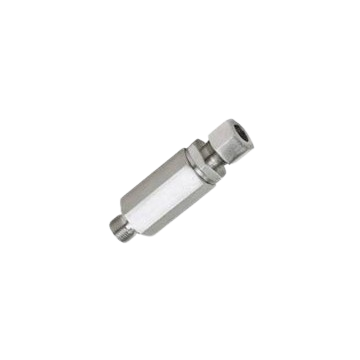
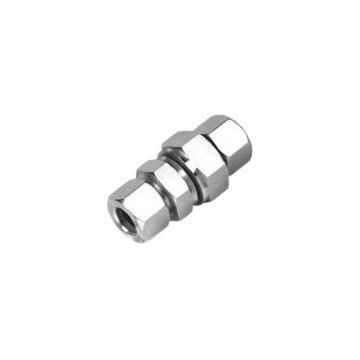
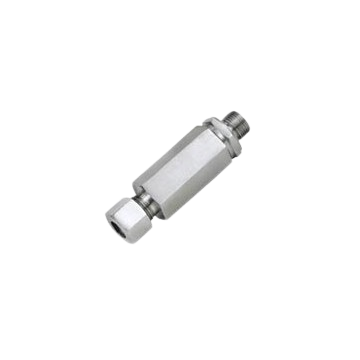
Instrumentation Check Valve
High precision stainless steel needle valve designed for accurate flow regulation in high-pressure industrial applications.
Instrumentation Check Valve
Technical Specifications
Detailed engineering specifications of our valve products
| Category | Specification Details |
|---|---|
| Valve Type | Instrumentation Check Valve – Spring Loaded / Poppet Type / Ball Type |
| Design Standard | ASME B16.34 / MSS SP-99 / Manufacturer Standard |
| Face-to-Face Standard | Manufacturer Standard (Compact Instrumentation Design) |
| Flange Standard | Not Applicable (Instrumentation Type) |
| End Connections | Compression (Double Ferrule), Tube OD, Male/Female NPT, BSP |
| Size Range | 1/8″ to 1″ (3 mm to 25 mm) |
| Pressure Rating | Up to 6,000 PSI (414 bar), optional up to 10,000 PSI |
| Body Material | SS316 / SS316L / Brass / Monel |
| Disc Material | SS316 / Hardened Stainless Steel |
| Stem Material | Not Applicable (No Stem) |
| Seat Material | Metal Seat / Soft Seat (PTFE, PEEK) |
| Seal / Packing | PTFE / PEEK / Viton |
| Operation Type | Automatic (Non-Return) |
| Temperature Range | −54°C to +232°C (Soft Seat), up to 425°C (Metal Seat) |
| Working Medium | Instrument Air, Gas, Water, Hydraulic Oil, Chemical Fluids |
| Fire Safe Design | Not Applicable (Instrumentation Type) |
| Testing Standard | API 598 / Manufacturer Standard |
| Blow-Out Proof Stem | Not Applicable |
| Anti-Static Device | Not Required |
| Mounting Pad | Not Applicable |
| Design Features | Compact Size, Low Cracking Pressure, Bubble-Tight Shut-Off, Non-Slam |
| Applications | Instrumentation Lines, Sampling Systems, Analyzer Panels, Control Systems |
| Documentation | Datasheet, MTC EN 10204 3.1, Pressure & Leakage Test Report |
Best Instrumentation check Valves
Now, beginners often assume every check valve behaves the same way, but an Instrumentation Check Valve is built differently. It’s usually more compact, designed for precise low-flow applications, and made to handle pressure without compromising accuracy. In tight instrumentation panels where space is limited, an Best Instrumentation check Valves fits neatly while still delivering dependable performance. But here’s where experience comes in—choosing the wrong cracking pressure can create headaches. Too high, and flow struggles to pass through. Too low, and reverse flow might still sneak in during pressure fluctuations. I’ve seen technicians chase “mystery issues” for days before realizing the Best Instrumentation check Valves wasn’t matched properly to the system. There’s also the material side of things. Stainless steel Best Instrumentation check Valves models work great in corrosive environments, but cheaper materials can wear out faster than expected. It’s one of those situations where saving a little money upfront sometimes costs more later. Still, when selected correctly, an Instrumentation Check Valve becomes one of those components you rarely think about again—and in industrial systems, that’s usually a sign that it’s doing its job exactly right.
"In industrial systems, a small leak can lead to big problems, that’s why sealing performance matters."
Key Features
Precision Control
Ensures accurate and smooth flow regulation.
High Pressure Resistance
Built for demanding industrial environments.
Leak Proof Design
Advanced sealing ensures zero leakage.
Corrosion Resistant
Made with premium stainless steel materials.